Statistics Gathering

Karen Morton just posted a great paper on her blog about statistics gathering. The paper is titled “Managing Statistics for Optimal Query Performance“. I was excited to see it because I think gathering stats is one of the most important and least well understood aspects of managing an Oracle environment. I must admit that I was expecting a recommended method or framework for gathering stats, but actually the paper is really more about how the statistics are used along with general guidelines for gathering them, rather than a direct recommendation on how to gather them. Nevertheless, it is one of the best papers I’ve seen on the subject. She’s going to present the paper at the Hotsos Symposium to be held in Dallas the week of March 9th. I’m going to be there and am really looking forward to hearing what she has to say on the subject.

By the way, I can’t recommend this conference highly enough. If you really want to understand how Oracle works, this is the place to be. You should know that I am not generally a fan of formal training classes. I have often been disappointed because I felt like my time would have been better spent researching the subject matter myself. On the other hand, I have found a lot of value in working closely on a project with someone who knows the subject matter well, kind of like a mentor. But generally speaking, the formal classes have been less satisfying, except in the rare case where you get the great instructor that wrote the class. This symposium format on the other hand allows you to listen to a collection of really knowledgeable Oracle people packed into a short period of time. I have been to the Hotsos Symposiums for several years in a row and I always come away with pages of notes on things I want to investigate further. And the participants are, generally speaking, a collection of very bright Oracle people. So even the conversations between the presentations are often very interesting. Finally, they run two presentations at a time which allows you to pick the presentation that is most interesting. I have often found it hard to choose (don’t tell anyone, but I have on more than one occasion listened to the first half of one and then the second half of the other). So like I said, I find it to be a very productive few days.

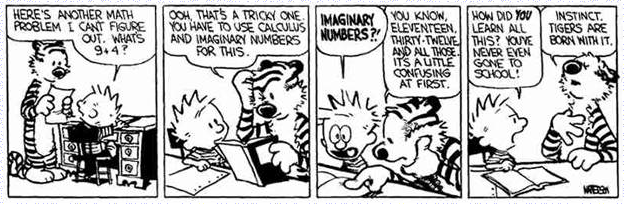
But I digress, Karen’s paper is pretty long (24 pages) but it covers a vast amount of ground. There are a number of one liners that could be expanded into full papers. In the paper she discusses a number of topics including dealing with short comings of the optimizer in 10g. One of those issues is bind variable peeking (probably my least favorite optimizer feature, quirk, bug, … what ever you want to call it). I must say that I think it has caused far more problems than it solved, and I frankly don’t know what they were thinking when they put that feature in. I wrote a little about a way to get around it using outlines here. By the way, this reminds me of a cartoon I drew 20 years ago that looked very similar to this one (that I lifted off of Steve Karam’s blog)

Of course as Karen points out, the right way to deal with bind variable peeking issues it is to understand your data and use literals where they are appropriate, keeping in mind the number of additional statements that will need to be parsed and dealt with in the shared pool. She also points out that code could be written to selectively use literals for specific values, giving you a mix of literals and bind variables for the same statement. This approach should allow you to minimize the impact on the shared pool while still providing the optimizer with the data it needs to make good decisions (this is a great idea but I’ve never seen anyone actually do it). And of course she points out that 11g has a much better mechanism for dealing with this whole issue.

Another idea that really got me thinking was the use of dynamic sampling . Karen clearly shows one of the advantages of dynamic sampling in the case of correlated predicates (i.e. the optimizer assumes a query where car_model = ‘Mustang’ and car_make = ‘Ford’ are independent, when clearly they are not). She shows how dynamic sampling can be very useful in conjunction with normal statistics in this situation. (rats, now I’m going to have to go play around with that a bit – so much to do, so little time)

Finally, she discusses some of the statistics gathering options and differences in 9i, 10g, and 11g. The automatic creation of histograms is one of the main differences between 9i and 10g and she discusses this issue, but doesn’t go into to much detail on it. I must admit that I think 10g’s default setup does a very poor job when it comes to histograms. This is the one area I would have liked to see address a little more fully, but at 24 pages already I can understand why she had to draw the line somewhere. Anyway, by default 10g creates histograms on columns based on several factors including their use in where clauses. Unfortunately, histograms often get created on columns where their usefulness is questionable at best and they regularly get created with a very small sample sizes. The small sample sizes often result in significant inaccuracies. I personally think that allowing the gather stats job to automatically create histograms in 10g is really bad idea.

Anyway, this is a paper that is well worth reading in my opinion. Typical Hotsos Symposium fare!

Saving Rows from Corrupt Blocks

Recently we ran into a database with a (or some) incomplete transactions that had not been able to rollback due to a file in the undo tablespace that had been deleted. And as luck would have it, the log files were some how lost as well (so we couldn’t just recover the undo file). So the database was up and running, but the undo file was missing and any time you hit one of the records that needed info from the missing undo file to rebuild a consistent version, it would fail with a ORA-00376  error (file not found). Technically that is not a corrupt block, just an uncommitted record that has been written, with missing undo. Make sense? Anyway, we narrowed it down to a couple of sub-partitions and were able to export the data from all the other sub-partitions. To get the data out of the affected sub-partitions we decided to use an approached based on the old rowid, which contained file_id,block_id, and row_num.

Toon Koppelaars did an excellent write up on this basic approach here. But it was written a while back and unfortunately the rowid was changed somewhere around the Oracle 8i time frame making it a little more difficult. However, in their infinite wisdom, the developers at Oracle added the DBMS_ROWID package which allows us to work around the issue.

So here’s the psuedo code for what we did:

Get Object Name (object_name)
Get Max Rows Per Block (max_rows_per_block)
Get List of Blocks by Extent for Object

For Each Extent
  For Each Block 
    For row in 1 to max_rows_per_block
      insert into saved_table select * from object_name 
        where rowid = dbms_rowid.rowid_create(file,block,row);
    End Row Loop
  End Block Loop
End Extent Loop

The actual script we used is a little more complicated. It actually created a Bad Blocks table as well so we’d know how many blocks were skipped and it had some error checking. I later embellished it a bit to make the object name dynamic (which was considerably more work than I thought it would be). Here’s the actual script I ended up with: save_u.sql. NOTE: I am not the worlds greatest pl/sql guy, so if you have any suggestions, let me know! But it seems to do the job. You may also find this script (obj_blocks.sql) useful for getting a list of all the blocks mapped to a specific object. And here’s a couple of scripts to create functions that might come in handy: create_new_rowid.sql (creates function new_rowid which returns the new format rowid if you give it the obj#, file#, block#, and row#) and create_old_rowid.sql (which returns the old format rowid if given the new format id). Here’s a quick example of the scripts in use:

> sqlplus / as sysdba

SQL*Plus: Release 10.2.0.3.0 - Production on Thu Feb 12 11:35:14 2009

Copyright (c) 1982, 2006, Oracle.  All Rights Reserved.


Connected to:
Oracle Database 10g Enterprise Edition Release 10.2.0.3.0 - Production
With the Partitioning, Real Application Clusters, OLAP and Data Mining options

SQL> @obj
Enter value for owner: MF
Enter value for name: BROKE%
Enter value for type: 

OWNER           OBJECT_NAME                    OBJECT_TYPE         STATUS  T
--------------- ------------------------------ ------------------- ------- -
MF              BROKE_NO_DEPENDENCIES          TABLE               VALID   N
MF              BROKE_YES_DEPENDENCIES         TABLE               VALID   N

SQL> set echo on
SQL> @save_u
Enter value for owner_name: mf
Enter value for table_name: BROKE_NO_DEPENDENCIES

WARNING: This script may issue a DROP TABLE command. Do not execute it unless you have read through it
and are comfortable you know what it does.

Ready? (hit ctl-C to quit)  
Enter value for owner_name: mf
Enter value for table_name: BROKE_NO_DEPENDENCIES    


Saved 18800 records in BROKE_NO_DEPENDENCIES_SAVED.
35 bad records in BROKE_NO_DEPENDENCIES_BAD.

PL/SQL procedure successfully completed.

SQL> set echo on
SQL> @create_old_rowid
SQL> create or replace function old_rowid (p_rowid rowid)
  2  return varchar as
  3  
  4    rowid_type NUMBER;
  5    object_id NUMBER;
  6    fileno NUMBER;
  7    blockno   NUMBER;
  8    rowno  NUMBER;
  9  
 10  BEGIN
 11  
 12     dbms_rowid.rowid_info(p_rowid, rowid_type, object_id, fileno, blockno, rowno);
 13  /*
 14     dbms_output.put_line('Row Typ-' || TO_CHAR(rowid_type));
 15     dbms_output.put_line('Obj No-' || TO_CHAR(object_id));
 16     dbms_output.put_line('RFNO-' || TO_CHAR(fileno));
 17     dbms_output.put_line('Block No-' || TO_CHAR(blockno));
 18     dbms_output.put_line('Row No-' || TO_CHAR(rowno));
 19  */
 20  return(to_char(fileno)||'.'||to_char(blockno)||'.'||to_char(rowno));
 21  
 22  END;
 23  /

Function created.

SQL> @create_new_rowid
SQL> create or replace function new_rowid (p_object_id number, p_old_rowid varchar)
  2  return varchar as
  3  
  4    new_rowid varchar2(30);
  5    fileno NUMBER;
  6    blockno   NUMBER;
  7    rowno  NUMBER;
  8  
  9  BEGIN
 10  
 11    fileno := substr(p_old_rowid,1,instr(p_old_rowid,'.')-1);
 12    blockno := substr(p_old_rowid,instr(p_old_rowid,'.')+1,instr(p_old_rowid,'.',1,2)-instr(p_old_rowid,'.'));
 13    rowno := substr(p_old_rowid,instr(p_old_rowid,'.',1,2)+1,100);
 14    new_rowid := DBMS_ROWID.ROWID_CREATE(1, p_object_id, fileno , blockno , rowno);
 15  
 16    return(new_rowid);
 17  
 18  END;
 19  /

Function created.

SQL> select rowid,old_rowid(rowid) old_rowid from mf.BROKE_NO_DEPENDENCIES where rownum < 5
SQL> /

ROWID              OLD_ROWID
------------------ ------------------------------
AAACYmAAEAAAAAMAAt 4.12.45
AAACYmAAEAAAACIAAt 4.136.45
AAACYmAAEAAAAAMAAF 4.12.5
AAACYmAAEAAAACIAAF 4.136.5

One other thing to keep in mind, as Toon mentioned, it may be possible to retrieve data from an index, even if the underlying data block is messed up. Selecting only the values of the indexed columns allows Oracle to completely bypass the data blocks. So, if for example, you found a set of blocks were inaccessible, you may be able to construct statements that would retrieve at least some of the data from the indexes like so:

select /*+ index (messed_up_object  mess_up_object_pk) */ indexed_column1, indexed_column2 
from messed_up_object 
where rowid in (select dbms_rowid.rowid_create(1,object,file,block,row) from bad_rows_table);

Your comments are always welcomed!

Oracle Fudge

One of my favorite holiday treats was my MeeMaw’s fudge brownies. Note: I did a brief poll (only 5 people so not statistically significant) but nevertheless, 100% of the people I surveyed had a grandparent that they called either MeeMaw or PopPa. And 40% had both a MeeMaw and a PopPa. Of course all 5 of the pollees were native Texans. Anyway, here’s what my MeeMaw’s fudge brownies looked like.

Oracle has a long history of baking fudge as well.

So here’s a little Oracle Fudge for you!

11gR1 has 4 parameters with the word fudge in them.

_nested_loop_fudge
_parallelism_cost_fudge_factor
_px_broadcast_fudge_factor
_query_rewrite_fudge

These four “fudge” parameters have been around with the same default values since at least 8.1.7. Maybe the elves will fix these in version 12.

And in keeping with the holiday theme, I’m reminded of the song “My Favorite Things” (often sung at Christmas) that goes:

“blah, blah, blah, blah, blah, blah,
These are a few of my favorite things”
(think Julie Andrews in Sound of Music)

Anyway, here’s a few of my favorite parameters (and my interpretation of what they mean):

db_cache_advice – If you turn this one on, Oracle will tell you what to do with your money.
db_cache_size – And this one will tell you how much money you have.
db_ultra_safe – Oddly enough, this one defaults to OFF. Seems like you’d want your database to be “Ultra Safe”.
ifile – Looks like someone from Apple slipped this one in (you know – iPod, iPhone, iMac, etc…).
large_pool_size – Just how big is your pool?
skip_unusable_indexes – Defaults to TRUE. I guess if you want, you can tell Oracle to use those unusable indexes.
_addm_skiprules – Yeah, rules suck!
_ash_size – Do these pants make my butt look big?
_backup_max_gap_size – How big does the doorway have to be to get your butt through it?
_asm_disk_repair_time – Uh oh, time to repair those disks.
_avoid_prepare – Why get ready ahead of time.
_awr_disabled_flush_tables – Not sure but it sounds stinky.
_awr_sql_child_limit – Population control?
_bloom_pruning_enabled – Trim the roses!
_bwr_for_flushed_pi – Not sure what this one does, but flushing pie seems like such a waste.
_cvw_enable_weak_checking – I’d prefer strong checking please! Get that weak stuff out of here!
_db_aging_cool_count – I used to be cool, I think.
_db_aging_hot_criteria – ???
_db_block_bad_write_check – I hope our database is not writing bad checks!
_db_block_check_for_debug – I think a developer from Chicago named this one (and it should be: _db_block_check_for_the_bug).
_db_cache_crx_check – I don’t know what a crx check is, but cashing any kind of check should be good, right?
_db_large_dirty_queue – Just like in the laundry room at home.
_db_row_overlap_checking – Do your rows overlap? Perhaps we should check that.
_disable_fast_aggregation – Why would anyone use this, “No thanks, I want really slow aggregation”
_dtree_pruning_enabled – Trim D-Tree too while yer at it!
_extended_pruning_enabled – Cut ’em way back!
_disable_recoverable_recovery – Hmmmm???? I guess if you don’t want your recovery to be recoverable you can set this one.
_dummy_instance – I’ve thought this many times (it’s basically the same as the _stupid_database parameter).
_dispatcher_rate_scale – How much are we paying that dispatcher anyway?
_fairness_threshold – My queries should always run faster than everyone else’s, I think that’s fair.
_flashback_fuzzy_barrier – Fuzzy Wuzzy was a bear, Fuzzy Wuzzy had no hair, Fuzzy Wuzzy wasn’t very fuzzy was he.
_gc_defer_time – I’ve wanted to do this many times in the past.
_ges_dd_debug – Sounds like a speech impediment, b,b,but maybe not.
_hard_protection – Well if it was easy, everyone would be doing it.
_imr_avoid_double_voting – They needed this in Florida during the 2004 election.
_in_memory_undo – Same as the _forget parameter.
_kdli_STOP_dba – Keep the DBA from messing up the system.
_kdli_delay_flushes – Don’t flush until a specified threshold is reached.
_kdlwp_flush_threshold – The amount of poo that triggers flushing (see _kdli_delay_flushes).
_kdli_memory_protect – Same as the _dont_forget parameter (i.e. the opposite of the _forget parameter).
_kdli_squeeze – One of my favorite bands.
_kebm_nstrikes – The number of strikes before you are out (defaults to 3 – no joke).
_kebm_suspension_time – How long before convicted felons can return to playing football.
_kill_enqueue_blocker – What the defensive linemen try to do on every play.
_kill_java_threads_on_eoc – I always turn this one on, because anything that kills java threads is OK in my book.
_kfm_disable_set_fence – Good fences make good neighbors.
_kse_signature_limit – The cash advance limit on your credit card.
_kse_snap_ring_size
_ksi_clientlocks_enabled – Can be used on clients when they won’t follow your advice.
_lm_better_ddvictim – Not sure what this one does, but it has the word victim in it, scary!
_lm_master_weight – Set this to get control of your diet.
_lm_tx_delta – Ah the Texas delta, I think it’s some where near Galveston.
_max_exponential_sleep – The older I get, the longer the naps.
_memory_sanity_check – Do I seem crazy to you?
_mv_generalized_oj_refresh_opt – In general, orange juice is refreshing!
_olapi_memory_operation_history_retention – Same as the _dont_forget parameter (see _kdli_memory_protect).
_olap_wrap_errors – When you cut the wrapping paper too short and it won’t go around the present and you have to cut a little strip to cover the gap.
_optimizer_ignore_hints – No matter what you hear in there, no matter how cruelly I beg you, no matter how terribly I may scream, don’t open that door.
_optimizer_random_plan – This one is self evident and has defaulted to TRUE since the CBO first came out.
_optimizer_squ_bottomup – Bottoms Up!
_parallel_fake_class_pct – “The higher you hold your pinky, the fancier you are.” – Patrick from Sponge Bob.
_parallel_syspls_obey_force – The parameter that allows you to get the sysadmins (syspls) to do what you tell them.
_pct_refresh_double_count_prevented – This would have been useful in Florida during the 2004 election.
_pdml_gim_staggered – Gim must have had too much to drink.
_pred_move_around – If your dad was in the air force and you moved from base to base while growing up, setting this parameter will make you feel right at home.
_px_no_stealing – This parameter is set to TRUE by default and it’s actually against the law to change it.
_px_nss_planb – Use this parameter if plan A doesn’t work.
_shrunk_aggs_enabled – I don’t like shrunk aggs, I like the big-uns, wif bacun!
_spin_count – Have you ever seen fans at a baseball game put their heads on the end of a bat and turn circles and then run? You get the idea.
_two_pass_reverse_polish_enabled – I don’t think this one is politically correct.
_use_best_fit – One size fits all does not fit all.
_write_clones – Send a letter to your siblings.
_ultrafast_latch_statistics – Anything that is ultrafast has got to be fantastic!
_xsolapi_densify_cubes – Densify??? I think they made that word up.
_xsolapi_optimize_suppression – Allows us to to keep the common man down as effectively as possible.
_xsolapi_stringify_order_levels – Stringify??? I think they made that word up too!
_xsolapi_use_models – It will make our advertising look better!

Here a few that allow you to turn on (or off) special checks:

_disable_acid_check – My acid is just fine thanks.
_disable_cpu_check – Yep, this machine has got at least one.
_disable_health_check – I don’t need no stinking annual checkup!
_disable_image_check – And I really don’t care how I look!

Here’s a few parameters dealing with death:

_px_execution_services_enabled – Apparently we can set up a special service for executions.
_xsolapi_share_executors – And if you have a lot of killing to do, it’s wasteful to not share executors.
_imr_splitbrain_res_wait – Sounds like it would hurt (if not kill).
_ksv_spawn_control_all – Creates zombies.
_cgs_zombie_member_kill_wait – Specifies how long to wait before slaying zombies!
_imr_evicted_member_kill – Boy I hope I don’t get evicted!
_ksu_diag_kill_time – Killing Time!
_ksuitm_dont_kill_dumper – The rumor is that this one was named by an animal rights activist and it was supposed to be “Don’t Kill Thumper”.
_lm_rcvr_hang_kill – Death by hanging!
_ksv_pool_hang_kill_to – If hanging doesn’t work, drown them in the pool!
_hang_detection – Turn this on so we’ll know when anybody is getting hung.

And just in case the 2000+ parameters in 11g aren’t enough, they have a few spares:

_first_spare_parameter
_second_spare_parameter
_third_spare_parameter
_fourth_spare_parameter
_fifth_spare_parameter
_sixth_spare_parameter
_seventh_spare_parameter

 Anyway, that’s it for now. I hope you have a happy holiday and a …

Merry Christmas!

Low Tech Solutions to High Tech Problems

When I got to work today I walked into my co-worker’s (Michael’s) office and saw this:


Data was scrolling by on the screen in rapid fashion. So I asked him what he was doing and he said he got tired of mashing the inner-butt-n  (that’s the way we say “pressing the the return key” in Texas). Works for me. He could have probably written a custom shell script with proper error checking and whatnot, but why, when the stapler was sitting right there.

I always thought the best programmers were basically lazy. They always seem to find ways to get more done in less time. When I was a young programmer my goal was to write a batch job that would run all month. That way I’d only have to come in on the first to kick it off for the next month. I never quite got there but I had fun trying.

Which reminds me of something that happened at my first programming job. I worked for an oil company that had more money than sense. We had two of everything. We actually had two Cray’s. Anyway, my boss had one of the very first transportable computers, a Grid. The Grids were very futuristic back in 1982. They looked pretty similar to what we have today. So anyway, my boss told me this story after returning from trip with his brand new Grid. He said he was on the airplane and decided to get his new toy out and play with it. So he gets it out of the bag and sets it up on the tray (I guess it was after the flight had taken off due to the electronics restrictions, oh yeah, they didn’t have those then!) – so anyway, he starts getting all the stuff out of the bag and getting organized, and by this time he says everyone within 10 rows is staring at him because no one had ever seen a laptop computer before. And he’s looking around smiling at everyone, thinking yeah this is pretty cool. Then he gets the last part out of the bag, … a power cord.

and he looks at the power cord …

and he looks around the cabin for a place to plug it in …

and he looks at the power cord again …

They didn’t have batteries on those early models. (they didn’t have ethernet jacks either, but they did have a 1200 baud modem BUILT IN!)  So anyway, he sheepishly puts the computer back in the bag and pretends to sleep for the rest of the flight.

Here’s a picture of the Grid computer (notice the wire running out the back <grin>):

My favorite low tech solution though was provided by a friend of mine that got a job right out of college working for an oil company. His first assignment was to fix a bug in an extremely complex reservoir simulation program. Apparently they had been trying to fix the bug for months.  The bug manifested itself by producing a result for one of the calculations that was always off by 1. And they just couldn’t figure out where the error was. They ran test case after test case through it and it was always off by 1. My friend worked on it for a day and then demoed it for them and it worked flawlessly. When asked how he did it, he said “Well, I just went to the end of the program and added 1 to the result”.


Your comments are always welcome.

Oracle Outlines – aka Plan Stability

Roughly 10 years ago, Oracle introduced a way to lock down execution plans. This was a response to the inherent unpredictability of the early cost based optimizer. The Oracle marketing machine even gave the feature the name “Plan Stability”. It appeared to be a good approach, basically allowing a DBA to lock an existing plan for a given statement. The mechanism employed to accomplish this was to create hints that didn’t allow the optimizer much (if any) flexibility to come up with an alternative plan. These hints are stored in the database in a structure called an OUTLINE or sometimes a STORED OUTLINE. The optimizer could then apply these hints behind the scenes whenever a SQL statement that matched was executed. By the way, “matching” basically means that the text of the statement matches. Originally outlines had to match character for character just like the normal rules for sharing SQL statements, but for some reason, Oracle later decided that the matching algorithm should be somewhat relaxed as compared to Oracle’s standard. What that means is that in 10gR2 by default whitespace is collapsed and differences in case are ignored. So (at least as far as outlines are concerned)  “select * from dual” is the same as “SELECT     *       FROM DuAl”. You’ll still get two different statements in the shared pool but they will use the same outline, if one exists.

With 9i, Oracle started to enhance this feature by adding the ability to edit the outlines themselves, but they never really completed the job. They pretty much quit doing anything with the feature after 9i. In fact, the script that creates the DBMS_OUTLN package ($ORACLE_HOME/rdbms/admin/dbmsol.sql) has not been updated since early in 2004 (with the exception of a tweak to keep it working in 11g). Anyway, I think it is a great feature with two primary uses.

  • First, it can be used to freeze a plan for a statement. This is especially helpful in situations where bind variable peeking is causing Oracle to alternate between a couple of plans.
  • Second, it can be very helpful when dealing with an application where the code can not be modified. Outlines provide a means of altering the execution plan for a statement without changing the code or making changes to the basic database configuration.

Lot’s of people have written about outlines, so I don’t want to just repeat information that is already available. But there doesn’t seem to be a single spot that pulls together all (at least what I consider to be all) the important stuff. Also, most of the stuff I have seen about outlines was written for 8i or 9i. As this is being written, 11gR1 has been out for over a year (although it has still not been widely adopted), and 10gR2 is far and away the most prevalent version in production. So, here we go.

Outlines can be created two ways.

  1. You can use the CREATE OUTLINE statement – which allows you to give your outline a name, but requires you to include the SQL statement as part of your CREATE OUTLINE statement. Therefore you can’t see what the execution plan is before creating the outline. Not very useful in my opinion.
  2. You can use the CREATE_OUTLINE procedure in the DBMS_OUTLN package – which doesn’t allow you to give your outline a name, but does let you specify a specific child cursor of a specific SQL statement in the shared pool. This means you can check the execution plan before creating the outline and that you can be sure the statement exactly matches what is being sent from the application.

Here’s an example:

CREATE OUTLINE myoutline FOR CATEGORY temp ON select * from dual;

EXEC DBMS_OUTLN.CREATE_OUTLINE('82734682234',0,'DEFAULT');

Continue reading ‘Oracle Outlines – aka Plan Stability’ »